From Wet Paws to Warm Sofa: A Calm Post-Walk Tidy-Up for Muddy Autumn Days
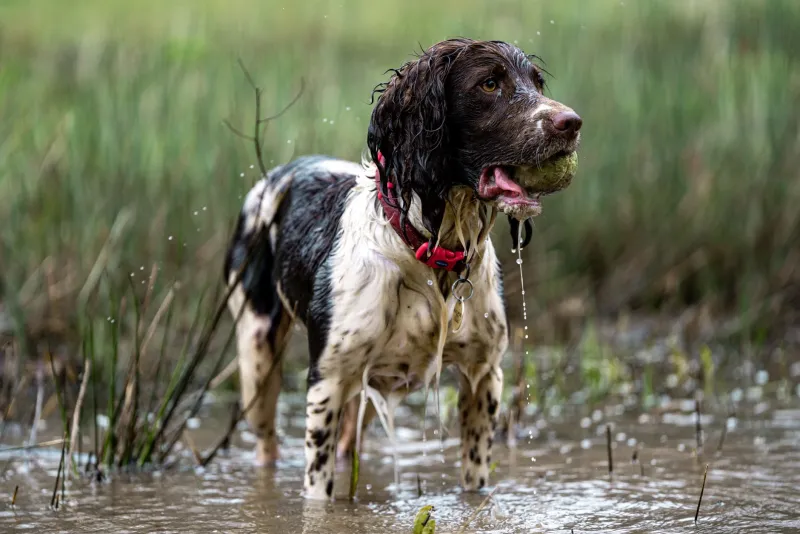
November in Britain does not tiptoe in. It arrives with wet leaves, low skies and a dog who has found the one remaining puddle on the entire recreation ground. We would not change the walk for anything. The return home, though, can feel less like a cosy scene from a dog calendar and more like a small environmental emergency involving towels, mud and a hopeful face.
The good news is that post-walk grooming does not need to be a battle. It does not need a professional table, a full kit or a dog who stands like a show champion. It needs a little preparation, a calm voice and the willingness to accept that the hallway will never be perfect. Here is a gentle routine for wet autumn days, written for ordinary owners living with ordinary, beautiful dogs.
Set up the hallway before you leave
A tiny bit of forward planning saves a lot of hopping about later. Keep a basket by the door with two microfibre towels, an old bath mat, a shallow basin or jug, a dog-safe paw rinse, a wide-tooth comb and a small pot of treats. If your dog is worried by handling, add a lick mat smeared with something dog-safe and tasty.
The aim is not a military operation. It is simply to stop the scramble at the door, when everyone is wet and the dog is delighted and you are trying to remove a lead, a coat and a muddy harness all at once. A calm setup tells your dog that this part of the day is predictable. Predictability is a quiet kindness.
Start with paws, not the whole dog
Paws first, because paws are where the mud enters the house and where small problems can hide. Use lukewarm water, never hot. A shallow basin works well for tolerant dogs; a jug of clean water poured gently over each paw works for dogs who prefer not to stand in water. If your dog really dislikes the basin, a wet towel is perfectly fine. The goal is to remove mud and grit, not to create a spa experience.
Dry between the toes carefully. This is the bit people skip, and it is the bit that matters. Damp paws can become sore, especially in dogs with hairy feet or sensitive skin. While you are there, have a quick feel for thorns, acorns, tiny stones and cuts. Autumn pavements and park paths are full of small hazards. If your dog pulls a paw away, licking it or limping, stop and take a closer look.
The coat check: fingers before brushes
Before you reach for a brush, run your hands over your dog. Feel for twigs, burrs, damp patches and little knots behind the ears, under the armpits and where the harness sits. Towel-dry gently rather than rubbing hard. A rough rub can felt a coat and make mats worse.
Coat type changes the routine. For curly coats such as cockapoos and poodle crosses, blot the worst of the water and let the coat dry a little before combing. Curls can tighten as they dry, so a wide-tooth comb used kindly, from the ends of the hair upwards, is your friend. For double-coated dogs, such as many retrievers and spaniels, towel dry and let the coat do its own thing. Do not reach for the clippers to solve a wet coat; double coats insulate and protect, and they should not be shaved off on a whim.
Short-coated dogs, including staffies and whippets, mostly need a towel and a warm, draught-free spot. Long, silky feathering needs a little more patience: check the ears, legs and tail for mud that has dried into tangles. If your dog is shivery, dry thoroughly and let them warm up slowly. Do not park a wet dog directly against a hot radiator.
Ears and eyes: gentle, not probing
Wet walks and floppy ears are a familiar combination. Dry the outside of the ear with a clean towel or a dry cloth. Let your dog shake. Do not push cotton buds into the ear canal. If your dog is shaking their head more than usual, scratching at an ear, or if the ear smells unpleasant, that is a job for the vet rather than a towel.
For eyes, a clean damp cloth can wipe away mud from the outside of the face, working away from the eye. If there is coloured discharge, swelling or squinting, seek advice. These small checks are not about diagnosing anything yourself. They are about noticing what is normal for your dog and acting early when something is not.
Mats and the mud that hides
Mats form when damp fur rubs against itself, especially under harnesses and behind ears. Never cut a mat out with scissors near the skin; it is far too easy to catch a dog. Do not yank a comb through a knot. Use a dog-specific detangling spray if you like, hold the hair above the knot to protect the skin, and work from the tip inwards. If the mat is tight, large or close to the skin, stop and book a professional groomer.
Prevention is kinder than rescue. A quick comb two or three times a week does more than an emergency session after every muddy walk. Ask your groomer to show you the right comb for your dog's coat, and keep feathering and paw hair trimmed by someone who knows what they are doing.
When to call in a professional
A good groomer is not a luxury; they are part of your dog's care team. Call one if mats are tight or widespread, if your dog will not tolerate being combed, if the coat is holding water and starting to smell, or if you simply feel out of your depth. Call your vet rather than a groomer if you see red, broken skin, a bad smell from the ears, sudden limping, swelling or a dog who seems painful to touch.
The same applies to behaviour. If every paw wipe turns into a wrestling match, stop. A groomer or reward-based trainer can help you build cooperative care in tiny steps. One paw today, a treat, a pause, another paw tomorrow. There is no prize for finishing the whole dog in one go.
Keep the vibe low
Use a quiet voice. Keep sessions short. Reward the bits your dog tolerates, not just the finished result. If your dog hates the towel, start by leaving it on the floor with a treat nearby. If they dislike the comb, touch it to a shoulder for one second and walk away. This is not fussing; it is teaching a dog that being handled is safe.
By the end, your hallway may still have a faint smear of mud. Your dog, however, will be dry, warm and comfortable, and that is the point. A calm tidy-up is not about keeping a perfect house. It is about looking after the dog who made the house muddy in the first place.